SMM Panel vs Social Media Automation: Which One Is Better?
SMM Panel vs Social Media Automation explained with key differences in features, costs, benefits, and ideal use cases for social media growth.

Taj Uddin Ahmed
Senior SEO Executive
SMM Panel vs Social Media Automation: Which One Is Better?
Social media growth is no longer handled through a single tool. Businesses, creators, agencies, and marketers often use several systems for publishing content, managing accounts, monitoring engagement, and supporting promotional campaigns. That is why the comparison between SMM Panel vs Social Media Automation matters.
Although both can reduce manual work, they solve different problems. An SMM panel is generally used to order specific social media promotional services, while automation software focuses more on scheduling, publishing, monitoring, reporting, and managing day-to-day social media activity.
Understanding that difference makes it much easier to decide where each solution fits into a practical marketing workflow.
What Is the Difference Between an SMM Panel and Social Media Automation?
The main difference between SMM panel and social media automation comes down to purpose.
An SMM panel acts more like a service-ordering dashboard. Users select a platform, choose a service, enter the required URL or account information, set a quantity, and submit an order. Depending on the provider, available services may cover platforms such as Facebook, Instagram, TikTok, YouTube, Telegram, X, and others.
Social media automation software works differently. It is designed to help marketers organize recurring activities such as publishing posts, planning content calendars, monitoring messages, coordinating multiple profiles, and reviewing performance data.
Here is the distinction at a glance:
Neither category completely replaces the other. Their value becomes clearer when we look at what happens after a social media strategy moves from planning into execution.
What Does an SMM Panel Actually Do?
An SMM panel centralizes social media promotional services inside one dashboard. Instead of contacting separate providers for different platforms or campaign requirements, users can usually place and track multiple orders from the same account.
A typical workflow may include:
- Creating or funding an account
- Choosing a social media platform
- Selecting a service
- Entering the required profile, page, post, or video URL
- Selecting the required quantity
- Placing the order
- Monitoring its status from the dashboard
For agencies and frequent buyers, this structure can make campaign administration more convenient.
For example, a marketer already running a broader Facebook marketing service strategy may use an SMM panel for selected promotional requirements while continuing to handle content, advertising, community interaction, and creative work separately.
The key point is that the panel supports a particular part of social media marketing rather than managing the entire marketing operation.
What Does Social Media Automation Software Do?
Social media automation software primarily reduces repetitive operational work.
A business posting across Facebook, Instagram, LinkedIn, TikTok, and other networks may otherwise need to log in to several platforms every day. Automation software can bring part of that workflow into one interface.
Common functions include:
- Scheduling posts in advance
- Managing content calendars
- Publishing across multiple profiles
- Monitoring comments and mentions
- Coordinating team approvals
- Organizing incoming messages
- Reviewing account performance
- Creating recurring reports
This makes automation particularly useful when consistency is the biggest problem.
A company working on Facebook business page promotion, for example, still needs regular posts, campaign planning, audience interaction, and performance reviews. Automation software can simplify those recurring responsibilities, while promotional services may support a different part of the campaign.
This distinction leads directly to another common comparison: management platforms versus service panels.
SMM Panel vs Social Media Management Tools: Why the Purpose Matters
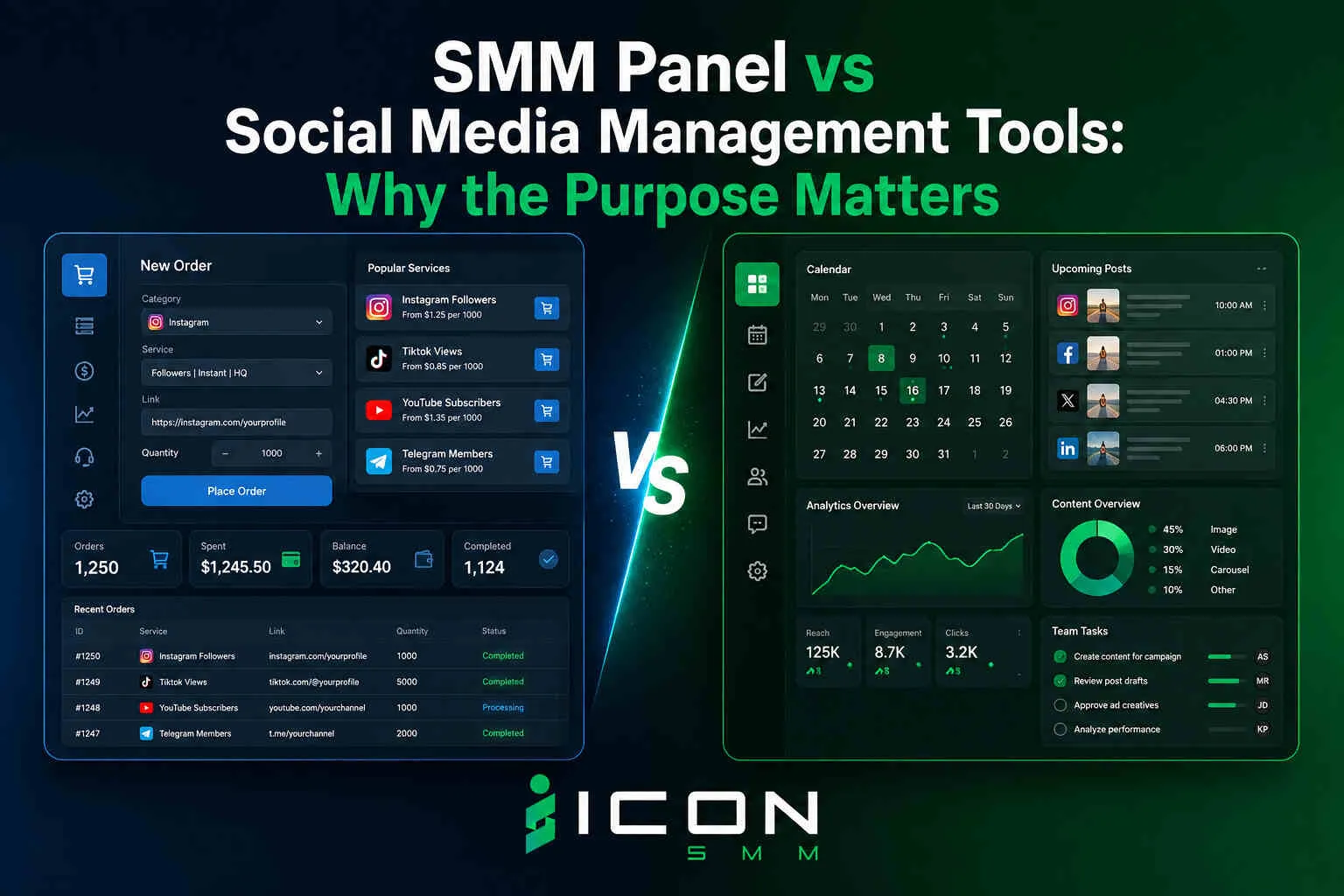
The comparison between SMM panel vs social media management tools can become confusing because both may appear as dashboards. However, the similarity largely ends there.
Social media management platforms are built around managing accounts and content. A marketer may open one dashboard in the morning to check scheduled posts, respond to conversations, review campaign results, and assign tasks to team members.
An SMM panel is usually more transaction-oriented. A user chooses a service and submits an order according to a particular campaign requirement.
Think about the difference this way: Social media management tools manage your workflow, while SMM panels manage service orders.
That difference matters because choosing the wrong tool for the wrong problem can create unnecessary costs. If your biggest challenge is publishing consistently, a management platform may solve more of the problem. If your workflow is already organized but you require access to specific promotional services, an SMM panel may fit that particular requirement.
The same principle applies when comparing panels specifically with scheduling software.
SMM Panel vs Social Media Scheduling Tools
The SMM panel vs social media scheduling tools comparison is even more straightforward.
Scheduling software answers questions such as:
- What should we post tomorrow?
- When should our campaign go live?
- Which posts are waiting for approval?
- What content is scheduled this week?
- Which social profiles need new content?
An SMM panel answers a different set of questions:
- Which service do I need?
- What quantity should I order?
- What is the current order status?
- How much will the selected service cost?
A scheduling tool therefore supports the publishing process, while an SMM panel supports specific promotional actions.
A business may need both, especially when it publishes frequently and runs campaigns around specific content. For example, a company investing in Facebook video promotion still needs to plan the video, publish it at the right time, distribute it, monitor audience response, and evaluate performance. Scheduling handles one part of that process. Promotion handles another.
Automated SMM Panel vs Social Media Automation Software
The phrase automated SMM panel vs social media automation software can create confusion because both systems may use automation behind the scenes. However, they automate different types of tasks.
In an automated SMM panel, automation typically focuses on order handling. Orders may be submitted, processed, tracked, or updated through connected systems with limited manual involvement.
In social media automation software, automation is usually tied to marketing workflows. This can include scheduled publishing, approval processes, recurring reports, inbox routing, notifications, and other repetitive management tasks.
The technology may involve automation in both cases, but the outcome is different: an automated SMM panel simplifies service delivery, while a social media automation platform simplifies marketing operations.
Understanding which type of automation you actually need can help you avoid paying for features that do not solve your current problem.
SMM Panel or Automation Tool: Which Is Better for Social Media Growth?
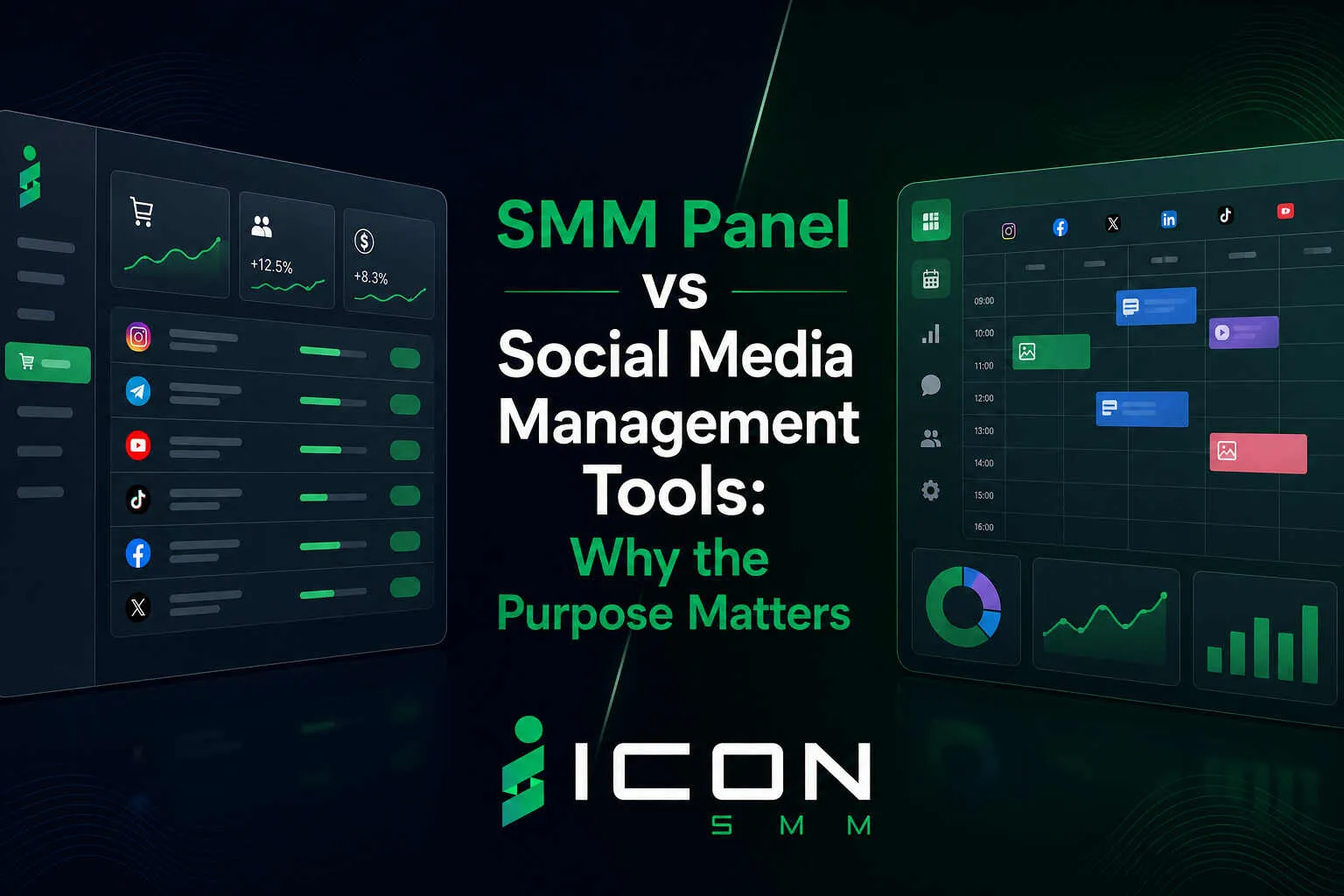
When asking the SMM panel or automation tool which is better for social media growth, there is no universal winner because social growth involves several separate activities. The better option depends on the bottleneck in your current strategy.
Choose Social Media Automation When Consistency Is the Problem
Automation software makes more sense when your team struggles with:
- Maintaining a posting schedule
- Managing multiple accounts
- Coordinating several team members
- Tracking content deadlines
- Responding to messages efficiently
- Producing recurring reports
- Keeping campaigns organized
These are operational problems.
Improving the workflow can free marketers to spend more time on strategy, creative work, audience research, and communication.
Consider an SMM Panel When You Need Specific Promotional Services
An SMM panel may be considered when your content and account-management system already exists but you need access to specific services from one dashboard.
For instance, businesses researching how to get Facebook page likes should first understand their wider audience-growth strategy. Content quality, audience relevance, profile credibility, community interaction, advertising, and promotion all contribute to the result.
The panel is one tool within that wider process rather than a substitute for it.
Many Businesses May Use Both
The choice does not always have to be either-or. A marketer could use an automation platform to schedule content throughout the month while using an SMM panel for selected campaigns.
That combination is often easier to understand once the advantages and limitations of both approaches are placed side by side.
SMM Panel vs Social Media Automation Pros and Cons
The SMM panel vs social media automation pros and cons depend heavily on how the tools are used.
The biggest mistake is expecting either tool to create a complete social media strategy automatically.
Strong social media performance still depends on understanding the audience, publishing useful content, maintaining a recognizable brand, testing different formats, reviewing results, and improving campaigns over time.
For Facebook in particular, Facebook page promotion works more effectively when promotional activity supports an active page instead of trying to replace regular posting and community engagement. Cost is the next major factor businesses usually compare.
Social Media Automation Pricing vs SMM Panel Cost
The social media automation pricing vs SMM panel cost comparison is difficult to make purely on price because the billing models are usually different.
Social media management software commonly uses a subscription-based model. The amount a business pays may depend on factors such as the number of users, connected accounts, available features, reporting capability, collaboration tools, or subscription tier.
SMM panel costs are more often connected to individual services and order quantities. This creates two different budgeting approaches.
Automation Software Is Usually an Operational Expense
A business may pay every month because it needs the system continuously.
The value comes from time saved, easier coordination, centralized publishing, and more manageable marketing operations.
SMM Panel Spending Is Usually Service-Based
Panel spending can rise or fall depending on campaign activity. A small creator may place occasional orders, while an agency or reseller may process larger volumes.
Instead of asking which option is cheaper, businesses should ask:
Which expense solves the problem currently costing us the most time or marketing resources?
That question produces a much more useful comparison.
SMM Panel vs Hootsuite for Social Media Marketing
The comparison between SMM panel vs Hootsuite for social media marketing mainly comes down to workflow management versus promotional service ordering.
Hootsuite belongs to the broader social media management category. Businesses generally consider this type of platform when they need to manage publishing, accounts, conversations, planning, and performance from a centralized environment. An SMM panel has a narrower role focused on ordering available services.
A marketing team could therefore use a management platform for its daily operations while treating an SMM panel as a separate resource for certain campaign requirements.
For example, a business managing a Facebook community may organize content through its management system while separately evaluating whether a Facebook comments service fits a particular promotional objective.
The tools do not need to compete because they are built for different jobs.
SMM Panel vs Buffer for Social Media Growth
The SMM panel vs Buffer for social media growth comparison follows a similar pattern.
Buffer is associated primarily with content publishing and social media management workflows. Businesses usually look at tools in this category when they want a cleaner system for organizing posts and maintaining consistent publishing.
An SMM panel focuses more heavily on available promotional services and order management.
For a small business with only a few profiles, a scheduling platform may be valuable simply because it reduces the risk of inconsistent posting.
An agency handling many campaign requirements may have different priorities and could use several tools together.
The best decision therefore depends on the job that needs to be done, not on which dashboard has the longer feature list.
How to Use SMM Panels and Automation Without Creating a Disconnected Strategy
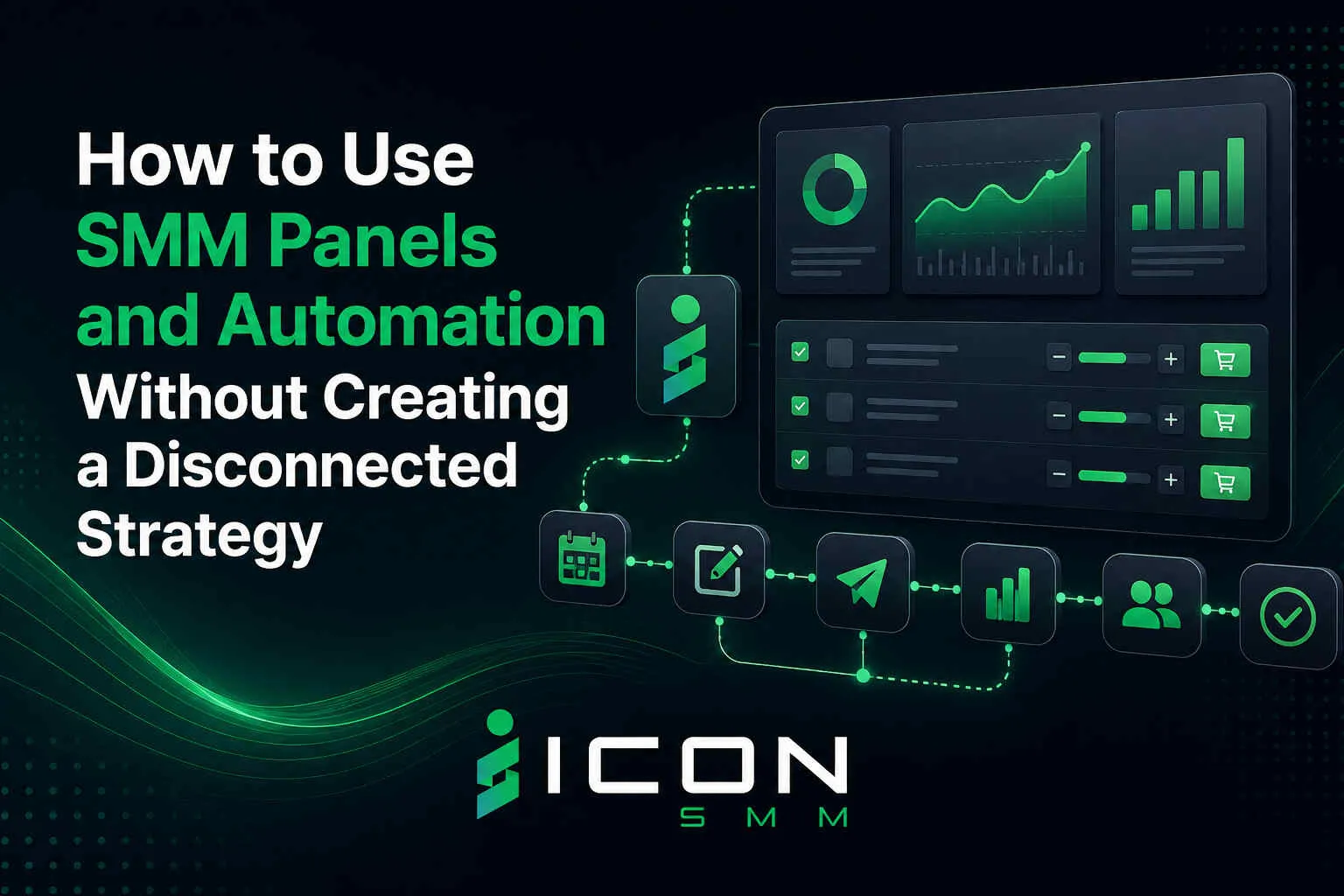
Using several tools can improve efficiency, but only when they work around one clear marketing plan. A practical workflow starts with the audience rather than the software.
First decide:
- Who are you trying to reach?
- Which platforms matter most?
- What content does that audience respond to?
- How frequently can you publish useful material?
- Which activities can be automated?
- Which tasks require genuine human communication?
- Where, if anywhere, do additional promotional services fit?
From there, automation software can handle predictable operational tasks.
Your team can then focus its attention on content ideas, customer conversations, creative decisions, campaign analysis, and brand positioning. Any promotional service should fit around those fundamentals.
This approach is particularly important on platforms where audiences quickly notice inactive or poorly maintained pages. Promotion may introduce additional visibility signals, but the page itself still needs useful content and a reason for people to stay.
What Small Businesses Should Choose
Small businesses usually have limited time, limited staff, and limited marketing budgets. That makes prioritization more important than collecting more tools.
If the business struggles to publish consistently, start with the workflow. A scheduling or management platform may immediately make day-to-day marketing easier.
If content production and publishing are already under control, the business can then evaluate whether additional promotional services make sense for specific goals. The decision should follow the problem.
Do not purchase a tool simply because competitors appear to use it.
What Agencies and Resellers Should Consider
Agencies have a different challenge because they may manage several clients, platforms, campaigns, and reporting requirements at the same time. Social media management software can help organize that complexity.
An SMM panel can serve a separate operational function where relevant services are required across multiple client campaigns. The important factor is internal process.
Agencies should clearly separate:
- Client strategy
- Content production
- Paid advertising
- Community management
- Scheduling
- Reporting
- Promotional service orders
When these responsibilities are clearly defined, it becomes easier to understand which technology supports each one.
Can Social Media Automation Replace Human Marketing?
No. Social media automation can reduce repetitive tasks, but it cannot replace the human judgment, creativity, and communication required for effective marketing.
A scheduled post still needs a strong idea, a performance report still needs proper interpretation, and a customer complaint still requires a thoughtful response. Every campaign also needs a clear goal, while the audience needs a genuine reason to engage with the brand.
Automation works best when it handles routine tasks and gives marketers more time to focus on strategy, content creation, audience relationships, campaign optimization, and other high-value activities.
Final Words
Choosing between an SMM panel and an automation platform becomes much easier once the purpose of each tool is clear. Automation software is primarily about making social media operations more organized, while an SMM panel is primarily about accessing and managing selected promotional services.
Businesses that struggle with scheduling, multi-account management, collaboration, or recurring publishing should usually address those workflow problems first. Businesses with an established marketing process can separately assess whether particular SMM services have a place within specific campaigns.
That is the key distinction to remember when evaluating SMM Panel vs Social Media Automation.
Frequently Asked Questions
What is the main difference between an SMM panel and social media automation?
An SMM panel is mainly used for ordering available social media promotional services, while social media automation tools help schedule posts, manage accounts, organize workflows, monitor activity, and simplify recurring marketing tasks.
Can I use an SMM panel and social media automation together?
Yes. They can serve different parts of the same workflow. Automation software may manage content publishing and accounts, while an SMM panel may be used separately for selected promotional services.
Is an SMM panel the same as a social media management tool?
No. Social media management tools focus on publishing, monitoring, collaboration, reporting, and account administration. An SMM panel is generally structured around selecting, ordering, and tracking social media services.
Is social media automation better for small businesses?
It can be especially useful when a small business struggles with consistent posting, managing multiple profiles, or organizing limited marketing time. The best choice still depends on the specific problem the business needs to solve.
Can automation tools grow a social media account automatically?
Automation can make publishing and management more efficient, but audience growth still depends on content quality, targeting, consistency, audience relationships, positioning, and ongoing campaign improvement.
Are SMM panels cheaper than social media automation tools?
The pricing models are different. Automation platforms often involve recurring subscriptions, while SMM panel spending usually depends on selected services and order quantities. Comparing value is more useful than comparing price alone.
Which is better for agencies, an SMM panel or social media automation software?
Many agencies may find both useful for different reasons. Management software can organize multiple accounts and team workflows, while an SMM panel may handle selected service orders. The right combination depends on the agency's clients, workflow, and campaign requirements.