Is an SMM Panel Profitable? Costs, Margins & Growth
Is an SMM panel profitable? Explore costs, profit margins, risks, customer retention, and practical strategies for building a sustainable SMM panel business.

Taj Uddin Ahmed
Senior SEO Executive
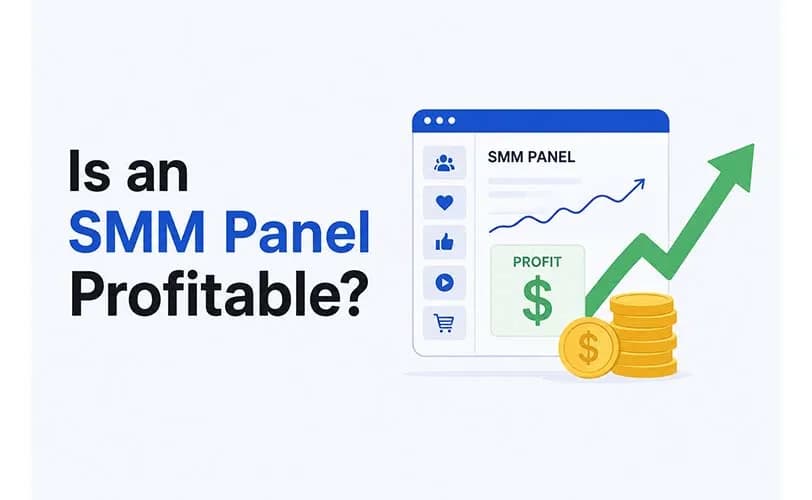
An SMM panel can be profitable when the business is built around strong service quality, competitive pricing, customer acquisition, and repeat orders. But profitability is not automatic. Is an SMM panel profitable depends less on the panel software itself and more on how well you manage margins, suppliers, marketing, and customer retention.
How the SMM Panel Business Model Makes Money
The basic model is straightforward. An SMM panel operator purchases social media services from a supplier at wholesale rates and sells them to customers at a higher retail price. The difference between the selling price and fulfillment cost creates the gross margin.
For example, suppose a provider charges $2 for 1,000 social media engagements and you sell the same service for $4. Your gross margin before other expenses is $2 per order. At scale, hundreds or thousands of orders can turn small margins into meaningful revenue.
This is why the SMM reseller business model attracts freelancers, agencies, marketers, and entrepreneurs. The next question is whether those margins remain attractive after the real operating costs are included.
What Actually Determines SMM Panel Profitability?
Profitability has several moving parts. Looking only at the price difference between wholesale and retail services can give you an unrealistic picture.
Wholesale Cost vs. Selling Price
Your supplier determines the starting point for your economics. A lower wholesale rate gives you more room to compete on price while preserving a reasonable markup.
However, the cheapest supplier is not necessarily the most profitable choice. Poor fulfillment can create refunds, replacements, customer complaints, and lost accounts. A slightly more expensive provider with dependable delivery can produce a better long-term return.
Order Volume Matters More Than Huge Markups
A common mistake is trying to make an enormous profit from every individual order. Customers can easily compare prices across competing panels, so excessive markups may reduce conversions. A better approach is to combine competitive pricing with volume.
These figures are illustrative rather than guaranteed earnings. Your actual result depends on service pricing, customer acquisition costs, payment fees, refunds, and operating expenses.
That distinction becomes especially important when calculating your SMM panel profit margin rather than simply looking at revenue.
Main Costs You Need to Control
An SMM panel can have relatively low infrastructure requirements, but “low cost” does not mean “no cost.” Several expenses can gradually reduce your net profit.
Platform and Technical Expenses
A basic operation may require a domain, hosting, panel software, API integration, security, payment processing, and technical maintenance.
A reseller or child-panel model can reduce the initial technical burden because the upstream provider handles much of the fulfillment infrastructure. A fully independent main panel usually requires more capital, supplier relationships, technical management, and operational control.
The difference between a child panel and main panel can therefore have a major effect on your startup risk and potential margin.
Marketing and Customer Acquisition
Getting customers is usually more difficult than launching the website. You may spend money on SEO, paid advertising, social media promotion, influencer outreach, affiliate commissions, or freelance marketplace fees. You also spend time answering questions, following up with prospects, and supporting existing customers.
If acquiring a customer costs $10 and that customer generates only $5 in lifetime gross profit, the business is losing money regardless of how attractive the service markup looks.
Refunds, Refill Costs, and Failed Orders
Service quality directly affects profitability. Drops, incomplete orders, delayed delivery, and failed campaigns can create additional costs.
A supplier with an attractive price but frequent problems can therefore be more expensive than a reliable provider.
This is one reason SMM panel services should be evaluated using both price and fulfillment performance.
Is an SMM Panel Profitable for Beginners?
Yes, but beginners should start with a controlled model rather than trying to build a huge platform immediately.
The simplest route is often to become a reseller first. You can test demand, identify profitable services, learn customer behavior, and understand which acquisition channels actually produce sales.
Once you have consistent demand, automation becomes more valuable. A branded storefront can allow customers to register, add funds, select services, and place orders without requiring you to process every request manually.
This creates a natural progression:
Resell manually → validate demand → build a branded panel → automate orders → increase customer volume → improve margins.
That sequence reduces the risk of investing heavily before you know whether customers will actually buy.
Which Services Can Generate Better Margins?
Not every service deserves the same pricing strategy. Highly competitive services often have lower margins because customers can compare them across dozens of websites.
More specialized services may provide greater pricing flexibility when there is sufficient demand.
Common categories include:
- Instagram followers, likes, and views
- TikTok followers and engagement
- YouTube views, subscribers, and watch time
- Facebook page engagement
- Telegram members and channel promotion
- X engagement
- Spotify plays and related promotional services
The best product mix depends on your target market. A panel serving agencies may prioritize bulk services and automation, while a local reseller may focus on a smaller group of services that are easy to sell repeatedly.
Rather than listing hundreds of services simply because your supplier offers them, build your catalog around actual customer demand.
Why Customer Retention Is the Profit Multiplier
Acquiring a new customer is generally more expensive than generating another purchase from someone who already trusts you. This makes repeat orders particularly important for an SMM panel.
Imagine two businesses. The first acquires 1,000 customers but most make one purchase. The second acquires 300 customers and consistently receives repeat orders from them. The second business may generate substantially more lifetime value despite having fewer customers.
A strong customer retention strategy can include transparent service descriptions, realistic delivery expectations, responsive support, order tracking, refill policies, and competitive pricing. The experience after the first order can determine whether that customer returns.
Can Automation Make the Business More Profitable?
Automation can improve profitability because it allows a relatively small team to process a larger number of orders.
An API can connect your storefront with a supplier. When a customer submits an order, the system can automatically send the order to the fulfillment provider and return status information to your dashboard.
Without automation, every additional customer creates more manual work. With automation, operational capacity can increase without increasing staff at the same rate.
However, automation does not solve weak demand. It makes an existing business more efficient; it does not create customers by itself.
That is why SMM panel API integration should be considered a scaling mechanism rather than the entire business strategy.
Main Panel vs. Reseller Model: Which Is More Profitable?
There is no universal winner.
A reseller model usually has a lower barrier to entry. You can start with less technical infrastructure and use an established supplier's services. The trade-off is that another provider sits between you and the original source, which can reduce your control and potentially narrow your margins.
A main panel can provide greater control over suppliers, pricing, service availability, and infrastructure. It may also create stronger margins when operated efficiently.
For most beginners, starting smaller and upgrading after proving demand is the more sensible approach.
How to Calculate Your Real Profit
Revenue alone tells you very little. You need to calculate net profit.
A simple formula is:
Net Profit = Sales Revenue − Service Costs − Payment Fees − Marketing Costs − Refunds − Operating Expenses
For example, imagine your panel generates $5,000 in monthly sales.
The example produces a 24% net margin, even though the difference between the retail price and supplier cost initially looked much larger.
This is the number that matters when evaluating whether your operation is genuinely profitable. For additional context on how gross margin is calculated, see Investopedia's explanation of gross profit margin.
The Biggest Risks That Can Destroy Profit
The SMM industry is highly competitive, and several problems can quickly turn a profitable-looking operation into a weak business.
Competing Only on Price
A race to the bottom is difficult to win. Another panel can always attempt to undercut your price.
Instead, compete through a combination of service reliability, customer support, payment convenience, speed, transparency, and specialized offers.
Depending on One Supplier
If your supplier experiences downtime, changes pricing, removes services, or delivers poor-quality orders, your customers experience the consequences.
Having alternative suppliers for important services can reduce operational risk.
Ignoring Customer Support
A customer who cannot get an answer about a delayed order may not return.
Support is therefore not just an expense. It is part of your retention strategy.
Expecting Passive Income
The phrase “passive SMM panel business” can be misleading. Automation can reduce repetitive work, but profitable operations still require marketing, pricing decisions, supplier monitoring, customer support, SEO, analytics, and product management.
The strongest operators build systems that reduce manual work rather than assuming the business will operate without attention.
How to Make an SMM Panel More Profitable
Once the basic operation is working, profitability can be improved through several practical levers.
Increase Average Order Value
Instead of focusing exclusively on more customers, encourage existing customers to purchase larger packages or complementary services.
For example, someone purchasing Instagram engagement may also need additional promotional services. Bundling relevant offers can increase revenue per customer without requiring an entirely new acquisition campaign.
Improve Your Pricing Structure
Use different margins for different services instead of applying one markup everywhere. High-volume services may require competitive pricing, while specialized or less commoditized offers can support higher margins.
Build Recurring Revenue
Recurring customers create more predictable revenue than constantly searching for new buyers. Agencies, social media managers, creators, and resellers can become particularly valuable customers because they may place orders repeatedly for multiple accounts.
Focus on One Market First
Trying to target every country and every social network from day one can dilute your marketing. A focused market allows you to understand payment preferences, language, pricing expectations, search behavior, and customer needs more deeply.
Once the model works in one market, expansion becomes easier.
What Makes an SMM Panel Business Sustainable?

Short-term sales are not enough. A sustainable operation needs a combination of demand, healthy unit economics, reliable fulfillment, and repeat customers.
Think about the business as a system:
Traffic → Leads → Orders → Fulfillment → Customer Satisfaction → Repeat Orders → Lifetime Value
If traffic is strong but fulfillment is poor, customers disappear. If fulfillment is excellent but acquisition costs are too high, profits disappear. If customers buy once and never return, growth becomes expensive. The strongest business is the one where every stage supports the next.
A Practical Profitability Checklist
Before investing heavily, evaluate the business against these questions:
- Can you source reliable services at competitive wholesale rates?
- Do your target customers have recurring demand?
- Can you acquire customers at a sustainable cost?
- Is your pricing competitive without destroying your margin?
- Can your supplier handle increasing order volume?
- Do you have a clear refund and refill process?
- Can orders be automated through an API?
- Can customers pay using methods they already trust?
- Do you have a customer-support process?
- Can you generate repeat purchases?
- Have you calculated net profit rather than gross revenue?
If most of these answers are positive, the business has a stronger foundation.
Frequently Asked Questions
Is an SMM panel a good business to start?
It can be a viable low-infrastructure digital business, particularly for people who already have marketing, sales, agency, or reseller experience. Success depends on customer acquisition, service reliability, pricing, and retention rather than simply owning a panel.
How much money do you need to start an SMM panel?
The required amount varies significantly. A reseller or child-panel setup can require relatively little initial capital, while an independent operation requires more investment in technology, supplier relationships, working capital, and support.
What is the profit margin of an SMM panel?
There is no universal margin. It depends on wholesale prices, retail pricing, service quality, payment costs, refunds, marketing expenses, and order volume. Gross markup can look attractive while net profit remains modest after operating costs.
Is an SMM panel business passive income?
Not completely. Automation can handle order processing and fulfillment, but profitable operations still require marketing, pricing management, supplier monitoring, customer support, and ongoing optimization.
Is a reseller panel better for beginners?
Usually, a reseller model is easier to test because it requires less infrastructure and technical responsibility. It allows beginners to validate demand before committing to a more complex main-panel operation.
How can an SMM panel increase its profits?
The biggest opportunities usually come from improving customer retention, increasing order volume, controlling acquisition costs, optimizing service pricing, reducing failed orders, and automating repetitive operations.
What is the biggest mistake new SMM panel owners make?
Many focus on launching the website and adding hundreds of services before building a reliable customer-acquisition and fulfillment system. A smaller catalog with dependable services and real demand is often a stronger starting point.
Final Verdict
So, is an SMM panel profitable? Yes—but profitability comes from the business model surrounding the panel, not from the software itself. A reliable supplier, sensible pricing, controlled acquisition costs, automation, strong support, and repeat customers can turn a small reseller operation into a scalable digital business. The smartest approach is to validate demand first, measure real net profit, and scale only after the numbers prove the model works.